
Many creative projects begin with a strong format preference. One manager might love the warmth of real people on screen, while another immediately pictures playful, colorful illustrations. Both instincts are completely understandable, but the most effective choice almost always comes directly from the message itself. If you step back and ask precisely what you need to show your audience, the answer points quite clearly toward either animation or live action.
1. When to Choose Animation: Explaining the Invisible
Understanding your core subject matter is the most reliable way to begin this selection process. Some ideas have nothing tangible to film in the physical world. Data flowing rapidly through a digital network, complex financial processes behind the scenes, the internal mechanics of a pharmaceutical drug working inside the human body, or architectural plans for a building that does not yet exist cannot be captured easily or satisfyingly by a traditional camera lens.
Animation naturally excels in these abstract spaces. It effortlessly zooms deep inside heavy machinery, simplifies a convoluted corporate system into clean, understandable shapes, and demonstrates decades of historical change in just a few seconds. When your core message relies on explaining something abstract, invisible, or overly complicated, drawing it out is the most direct and efficient route to true audience understanding.
2. When to Choose Live Action: Building Human Trust
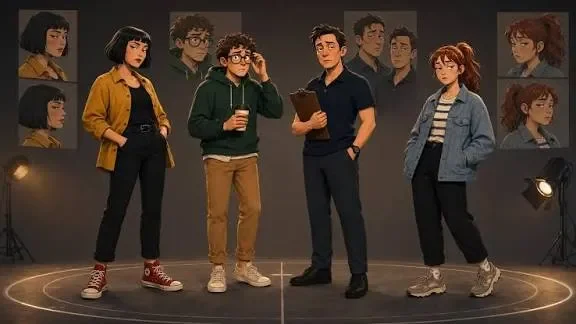
Conversely, other types of communication rely entirely on immediate credibility and human connection. A customer testimonial, a company recruitment piece, or a serious public apology from executive leadership truly needs real people on camera. Modern viewers want to observe facial expressions, hear genuine human voices, and judge sincerity for themselves before deciding whether to trust a brand or organization.
Live action carries the vital weight of human proof. While a clever illustrated character can certainly be charming and approachable, it cannot stand in for a real, living customer describing with genuine emotion how a service changed their week for the better. The presence of authentic people bridges the empathy gap in ways illustrations cannot replicate.
3. Format Comparison at a Glance
| Factor | Animation | Live Action |
| Best Used For | Abstract concepts, data, software workflows, and future products. | Testimonials, leadership messaging, culture pieces, and human connection. |
| Updates & Longevity | High flexibility; digital assets are easy to edit or refresh down the line. | Fixed content; prone to aging due to fashion, hairstyles, and tech changes. |
| Brand Alignment | Fits playful, innovative, and tech-forward brand personalities. | Fits authoritative, high-end, or emotion-driven brand identities. |
4. Evaluating Lifespan and Brand Personality
You must also carefully consider the long-term lifespan of your finished content. Animation is much easier to update down the line. Swapping out a single line of text, changing a background color scheme, or adjusting a motion graphics scene happens directly within the digital editing suite rather than requiring an expensive, time-consuming reshoot with actors and crew. This makes animation exceptionally useful for marketing content tied to software products, ongoing services, or corporate policies that change regularly.
Live footage ages in entirely different ways. Outdated hairstyles, rapidly shifting fashion trends, older technology sitting visibly on desks, and normal staff turnover within an organization make a live-action video feel dated much sooner than expected. When planning your production, always consider how many months or years you realistically need the piece to stay relevant and fresh in the market.
Furthermore, your established brand personality matters immensely. Some businesses naturally suit a hand-drawn, friendly, and approachable look, while others require the clean polish and authority of high-end cinematic footage. Think carefully about how your target audience already perceives you in the marketplace. A playful, cartoony animation produced by a serious legal firm thoroughly confuses potential clients, whereas a stiff, overly corporate live-action shoot feels entirely wrong for a youthful, energetic lifestyle brand.
5. The Power of a Hybrid Approach
Fortunately, you do not always have to choose just one format. Many of the most effective commercial videos successfully combine filmed interviews with animated graphics, dynamic diagrams, and clean title cards. A real human presenter can explain a core concept while clear visual illustrations appear right beside them on screen, giving viewers both the vital human connection and the sharp visual clarity required for complex topics.
This hybrid approach works exceptionally well for comprehensive explainer videos, internal training modules, and annual reports, where certain segments benefit immensely from a human face while others rely heavily on a diagrammatic breakdown.
Before making a final commitment, take the time to talk through your message with creative professionals who work fluently in both formats. Teams offering professional animation services can show you how a dry concept transforms into dynamic motion graphics or character animation, while an experienced film crew can suggest how that exact same story plays out with real actors. Comparing those distinct perspectives side by side reveals which approach best serves your overarching goal. Start by identifying what you need viewers to understand or feel, and work backward from there.